The sports world stood still in March 2022 when news broke about a bright star from Stanford University. Katie Meyer, the charismatic and fiercely talented goalkeeper, was more than just an athlete. She was a leader, a scholar, and a friend to everyone she met. However, the questions surrounding the Katie Meyer cause of death brought a heavy cloud of sadness over the community. Her story is one of incredible highs on the soccer field and a tragic ending that has since sparked a nationwide conversation about student-athlete mental health and university transparency.
When we talk about Katie, we remember her infectious energy and that famous 2019 championship save. But we also have to talk about the pressure that young stars face today. Understanding the Katie Meyer cause of death isn’t just about looking at a single moment in time; it is about honoring a legacy that is now helping to protect thousands of other students through new laws and better support systems.
Who Was Katie Meyer?
Katie Meyer was a powerhouse from Newbury Park, California. Growing up, she wasn’t just a soccer player; she was a dreamer who wanted to change the world. She had a personality that could light up a room and a competitive spirit that made her a legend on the pitch. Whether she was acting as a Resident Assistant at Stanford or defending the goal, Katie gave 100% to everything she did.
Her family remembers her as a loving daughter and a protective sister. She was the middle of three girls, and they were often called the “three musketeers.” Katie loved coffee dates, surfing, and her podcast, “Be The Mentality.” She was a young woman who seemed to have it all—intelligence, athletic fame, and a bright future in law school. This is why the news regarding the Katie Meyer cause of death was such a profound shock to those who knew her only through her successes.
The Heartbreaking Katie Meyer Cause of Death
In early March 2022, the Santa Clara County Medical Examiner-Coroner confirmed that the Katie Meyer cause of death was suicide. The 22-year-old was found in her dorm room at Stanford University. This news sent ripples of grief through the campus and the national sports community. It was a tragedy that no one saw coming, as Katie had been seen smiling and laughing with friends just hours before.
Investigations later revealed that Katie was under immense stress due to a potential disciplinary action from the university. Her parents, Steve and Gina Meyer, have been very open about the fact that Katie received a “threatening” email regarding a disciplinary matter right before her passing. They believe this specific pressure, combined with the weight of her responsibilities, led to a moment of total overwhelm.
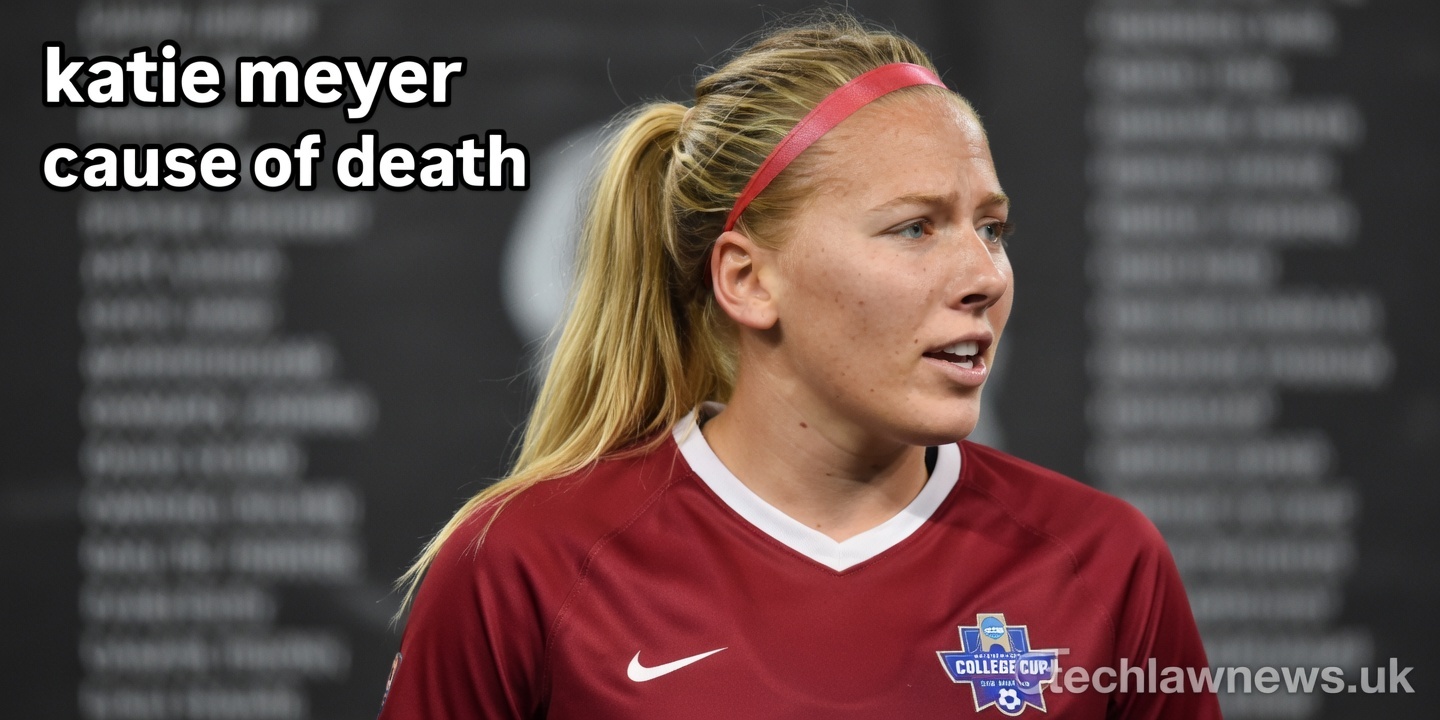
| Full Name | Kathryn Diane Meyer |
| Date of Birth | January 20, 2000 |
| Birthplace | Burbank, California |
| Education | Stanford University |
| Major | International Relations |
| Position | Goalkeeper (#19) |
| Cause of Death | Self-Inflicted (Suicide) |
| Date of Death | March 1, 2022 |
| Legacy Law | Katie Meyer’s Law |
The Night Everything Changed at Stanford
The days leading up to the tragedy seemed normal to those around her. Katie had just finished a FaceTime call with her parents, where she appeared excited about upcoming plans. However, behind the scenes, a disciplinary process was unfolding. This process was linked to an incident where Katie had defended a teammate, but the university’s formal response reportedly made her feel like her future and her degree were at risk.
The Katie Meyer cause of death highlight a major gap in how universities handle student crises. When a student is facing discipline, they often feel isolated and scared. For someone like Katie, who held herself to the highest standards, the fear of losing her hard-earned dreams was too much to bear. Her story reminds us that even the strongest leaders need a hand to hold when things get dark.
A Legacy of Victory: The 2019 NCAA Championship
If you are a soccer fan, you probably remember the 2019 NCAA Division I Women’s Soccer Championship. Stanford was facing North Carolina in a high-stakes penalty shootout. Katie Meyer became a household name that night. She made two incredible saves, but it was her “celebration” that went viral. She pointed to her head and gave a fierce look that showed the world she was a true warrior.
That victory wasn’t just about a trophy; it was about the team. Katie loved her teammates like family. She was later named a team captain, a role she took very seriously. Even as we discuss the Katie Meyer cause of death, it is important to balance that sadness with the memory of her triumph. She was a champion in every sense of the word, leading with both her talent and her heart.
More Than an Athlete: Academic Excellence
Katie wasn’t just a “jock.” She was a brilliant student majoring in International Relations with a minor in History. She was a Mayfield Fellow and a Defense Innovation Scholar. Her goal was to attend Stanford Law School after graduation. She wanted to use her voice to fight for justice and make the world a better place for others.
Her academic load was heavy, but she handled it with the same grace she used on the field. She was a Resident Assistant, which meant she was responsible for the well-being of other students in her dorm. This is a cruel irony of the Katie Meyer cause of death—she was the person everyone else turned to for help, yet she felt she couldn’t reach out when she needed it most.
What is Katie Meyer’s Law?
In the wake of their loss, Steve and Gina Meyer created the “Katie’s Save” foundation. Their goal was to make sure no other student felt as alone as Katie did in her final moments. This led to the creation of Katie Meyer’s Law (specifically AB 1575 in California). This law is designed to give students the right to have a “trusted advocate” or an advisor present during university disciplinary meetings.
The idea is simple: if a student is in trouble, they shouldn’t have to face a massive institution by themselves. Having a parent or a mentor involved can provide the emotional support and clear-headedness needed to navigate tough situations. The Katie Meyer cause of death has directly influenced this legislation, turning a personal tragedy into a protective shield for future generations.
The Role of Mental Health in College Sports
The Katie Meyer cause of death opened a floodgate of discussions about the mental health of college athletes. We often see these players as “superhumans” who can handle any amount of pressure. But the reality is that they are young adults dealing with a “double life” of elite sports and elite academics.
Statistics show that student-athletes often face unique barriers to seeking help. They may fear that admitting they are struggling will lead to less playing time or being seen as “weak.” Since Katie’s passing, many universities have increased their mental health resources, but there is still a long way to go. We must foster an environment where “it’s okay not to be okay.”
The Settlement Between Stanford and the Meyer Family
In early 2026, a joint resolution was reached between Stanford University and the Meyer family regarding a wrongful death lawsuit. While no amount of money or legal talk can bring Katie back, the settlement included several key initiatives. Stanford agreed to launch new mental health programs specifically for student-athletes at the Wu Tsai Human Performance Alliance.
Additionally, the university decided to retire Katie’s jersey number, #19, in honor of her impact. They also established the Katie Meyer Leadership Award. These steps show a commitment to learning from the past. The Katie Meyer cause of death serves as a permanent reminder for institutions to prioritize the human being over the student or the athlete.
How to Support the Katie’s Save Foundation
If you want to honor Katie’s memory, you can get involved with the Katie’s Save foundation. They are constantly working on suicide prevention programs and spreading awareness. You can join the “F19HT” (using her jersey number) by advocating for mental health reforms in your local community or school district.
The foundation also offers scholarships and training for coaches to better recognize signs of distress in their players. By talking about the Katie Meyer cause of death with compassion and honesty, we can help break the stigma that surrounds mental health.
Why We Must Never Forget Katie’s Story
It is easy for news stories to fade away, but Katie Meyer’s story is too important to forget. She represents the best of us—someone who was kind, smart, and talented, but who was also vulnerable. When we search for the Katie Meyer cause of death, we shouldn’t just look for a headline. We should look for the lessons she left behind.
We learn that we need to check on our “strong” friends. We learn that universities need to be more empathetic. And most importantly, we learn that a person’s value is not defined by their trophies or their grades. Katie was loved because of who she was, not just what she did.
Conclusion
In conclusion, the Katie Meyer cause of death was a tragedy that took a phenomenal young woman far too soon. However, her legacy is anything but a tragedy. Today, Katie is still “saving” lives. Through Katie’s Law and the work of her family, she is providing a voice for students who feel unheard.
Let’s remember Katie Meyer as the girl with the big smile and the golden gloves. Let’s honor her by being kinder to ourselves and to those around us. If you or someone you know is struggling, please reach out to the 988 Suicide & Crisis Lifeline. You are never alone, and your story matters just as much as Katie’s does.
FAQs
1. What was the official Katie Meyer cause of death?
The official cause of death was suicide, as confirmed by the Santa Clara County Medical Examiner. She passed away in her dorm room on March 1, 2022.
2. What led to the tragedy involving Katie Meyer?
While many factors can contribute to such an event, her family highlighted a disciplinary email from Stanford University that Katie received shortly before her death. They believe the stress of the university process was a major factor.
3. What is Katie Meyer’s Law?
Katie Meyer’s Law is a legislative effort (like AB 1575) that allows college students to designate a “trusted advocate” to be notified and present during disciplinary or administrative proceedings at a university.
4. How is Stanford honoring Katie Meyer today?
Stanford has retired her jersey number (#19), established a Leadership Award in her name, and settled a lawsuit with the family by committing to new mental health initiatives for student-athletes.
5. What was Katie Meyer’s biggest soccer achievement?
She is most famous for her performance in the 2019 NCAA Championship, where she made two crucial saves in the penalty shootout to lead Stanford to a national title.
6. Where can I find help if I am feeling overwhelmed?
If you are in the U.S., you can call or text 988 to reach the Suicide & Crisis Lifeline 24/7. There are people ready to listen and help you through your toughest moments.